
3609 Jamison Way Castro Valley, CA 94546



Bad breath, also known as halitosis, is a common issue that affects many people, causing discomfort in social situations and impacting confidence. While brushing and flossing are essential for maintaining oral hygiene, many still struggle with persistent bad breath. The missing link is tongue scraping. It is a simple, natural, and highly effective method for curing bad breath.
By adding this simple habit to your routine, you can easily remove bacteria, food particles, and dead cells that contribute to unpleasant odors. Best of all, tongue scraping offers a safe, cost-free solution that fits seamlessly into your daily oral care routine, helping you enjoy long-lasting fresh breath.
What is Tongue Scraping?
Tongue scraping is the act of using a tool to gently remove debris, bacteria, and dead cells from the surface of your tongue. The tongue can be a breeding ground for odor-causing bacteria, especially the back portion, where food particles, bacteria, and dead cells often accumulate.
The tools used for tongue scraping are typically made from metal or plastic, designed to fit comfortably in your mouth and allow for effective cleaning. A common scraper consists of a simple curved design that allows you to reach the back of your tongue and gently scrape the surface. Metal scrapers are popular due to their durability, but plastic versions can also be effective.
So, how does it work? When you scrape your tongue, you remove the bacteria and debris that contribute to foul-smelling breath. These bacteria break down food particles and produce sulfur compounds, which are responsible for the unpleasant odor.
Scraping helps prevent this by cleaning the tongue’s surface, leaving it fresh and clean. This practice is easy, quick, and can be done every morning or before bedtime to maintain a cleaner, healthier mouth.
How Tongue Scraping Helps With Bad Breath
Your tongue plays a central role in the development of bad breath. It’s covered with tiny bumps called papillae, which can trap bacteria, food particles, and dead cells. This is particularly true for the back of your tongue, which is often the hardest area to clean with a regular toothbrush. The accumulation of these substances results in the production of volatile sulfur compounds (VSCs), which are the primary culprits behind bad breath.
As per a professional dental expert in Castro Valley, tongue scraping helps to solve this problem by removing the buildup on your tongue. When you scrape the surface, you’re not only removing food particles but also effectively reducing the bacterial growth that leads to bad breath. This improves your oral hygiene and contributes to fresher breath.
Scientific studies show that tongue scraping is far more effective at reducing VSCs than brushing alone. Regularly scraping your tongue helps eliminate these compounds, ensuring your mouth stays fresh and clean throughout the day. The process also stimulates the production of saliva, which naturally helps in washing away bacteria and neutralizing odors.
For those in Castro Valley, California, a community known for its bustling local life and healthy lifestyle, tongue scraping offers a great solution to keep your mouth feeling fresh as you head to work or meet friends. It’s a quick and easy habit that enhances your oral hygiene without much extra time or effort.
The Benefits of Tongue Scraping
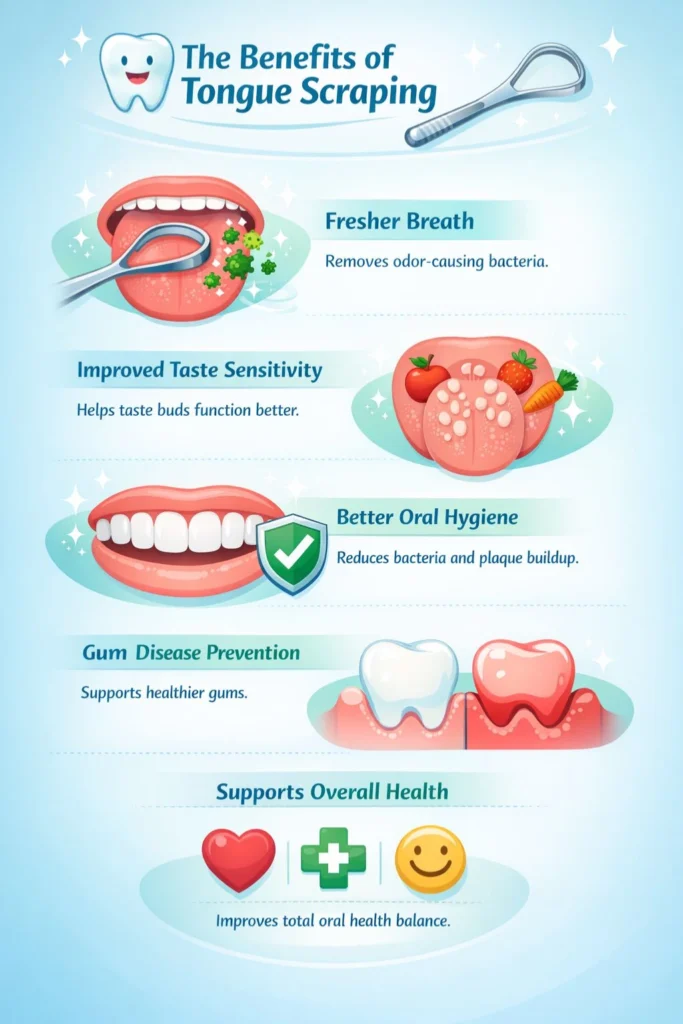
While tongue scraping is most commonly associated with fresher breath, it offers several additional benefits that can contribute to overall oral health. Here are some key advantages of incorporating tongue scraping into your routine:
- Improved Taste Sensitivity: By removing the bacteria and dead cells that can coat your taste buds, tongue scraping can enhance your sense of taste. This allows you to enjoy the full flavors of your meals and beverages.
- Better Oral Hygiene: Tongue scraping removes harmful bacteria, which can contribute to plaque buildup on teeth and lead to other oral issues such as gum disease. By maintaining a cleaner tongue, you’re reducing the overall bacterial load in your mouth, which helps prevent tooth decay and gingivitis.
- Prevention of Gum Disease: By keeping your tongue free from harmful bacteria, tongue scraping also aids in the prevention of gum disease. As bacteria contribute to plaque, and plaque can cause gum inflammation, scraping your tongue regularly can help maintain healthy gums.
- Enhanced Overall Health: Poor oral hygiene is linked to numerous health problems, including heart disease, diabetes, and stroke. By improving your oral hygiene with tongue scraping, you’re not only taking care of your breath but also contributing to better overall health.
How to Properly Scrape Your Tongue
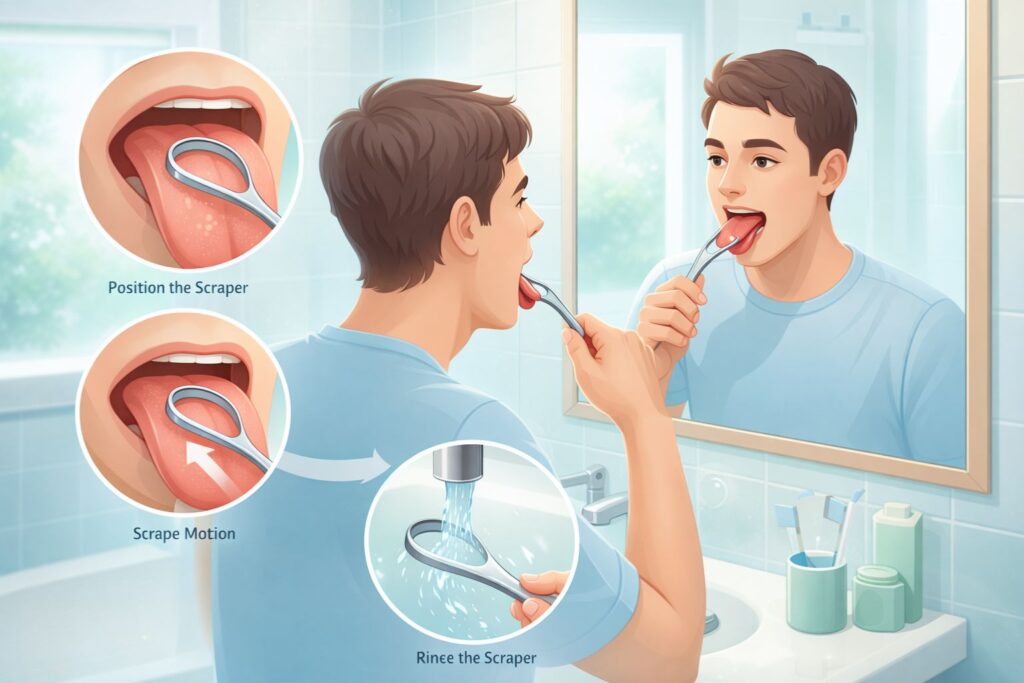
To get the most out of your tongue scraping routine, follow these simple steps offered by a qualified dental expert in Castro Valley for proper technique:
- Choose Your Tool: Start by selecting a tongue scraper made from either metal or plastic. Metal scrapers are durable and effective, while plastic scrapers may be more affordable.
- Position the Scraper: Gently place the scraper at the back of your tongue, as far back as you can comfortably reach. Avoid pressing too hard, as this may cause discomfort or injury.
- Scrape from Back to Front: Using a gentle but firm motion, scrape the scraper from the back of your tongue to the front. This will help lift off the buildup of debris and bacteria.
- Rinse and Repeat: After each scrape, rinse your scraper under water to remove the debris. Repeat this process 3-4 times or until the surface of your tongue feels clean.
- Brush and Floss: After scraping, follow up with your regular brushing and flossing routine. This ensures that your mouth stays fresh and clean.
- Frequency: For optimal results, scrape your tongue once or twice a day. Many people prefer to scrape their tongue in the morning, as it helps eliminate overnight buildup.
Always be gentle when scraping your tongue to avoid injury. If you feel any pain or discomfort, stop scraping and try again with less pressure. Tongue scraping should be a comfortable and easy part of your oral care routine.
Common Myths About Tongue Scraping
Despite its effectiveness, there are several myths and misconceptions about tongue scraping that prevent people from adopting this simple practice. Let’s address some of the most common concerns:
- Tongue Scraping Is Harmful: Some people worry that scraping their tongue will damage its surface or cause irritation. When done correctly, tongue scraping is safe. Always use gentle pressure to avoid injuring the delicate tissues of your tongue.
- Brushing Your Teeth Is Enough: While brushing your teeth is essential for oral health, it doesn’t clean your tongue thoroughly. The back of the tongue is a prime spot for bacteria to grow, and brushing alone doesn’t always reach these areas. Tongue scraping complements brushing, providing a more comprehensive oral hygiene routine.
- Only People with Bad Breath Need to Scrape Their Tongue: Tongue scraping is beneficial for everyone, not just those with bad breath. It promotes better overall oral hygiene, improves taste sensitivity, and can help prevent other dental issues.
- Tongue Scraping Is Time-Consuming: In reality, tongue scraping takes just a few seconds and can be done as part of your regular oral care routine. It’s a quick and easy habit that provides long-term benefits.
Tongue scraping is a simple yet powerful tool for improving your oral hygiene and preventing bad breath. With its ability to remove harmful bacteria, food particles, and dead cells, it ensures your mouth stays fresh and your breath stays pleasant throughout the day. By incorporating this simple habit into your daily routine, you can enjoy a cleaner mouth, better taste, and improved overall health.
At Castro Valley Advantage Dental, we encourage our patients to take charge of their oral health with simple habits like tongue scraping. It’s an easy way to maintain long-lasting fresh breath and enhance your overall oral hygiene. Visit us today for more personalized tips and solutions to improve your dental health. Let us help you achieve your healthiest smile!
Frequently Asked Questions
How often should I scrape my tongue?
It’s best to scrape your tongue once or twice a day, typically in the morning, for optimal results in fresh breath and cleaner oral health.
How long does it take to scrape your tongue?
Tongue scraping takes only a few seconds to a minute, making it a quick and easy addition to your daily oral care routine.
Can tongue scraping help improve my sense of taste?
Yes, by removing debris and bacteria from the tongue, scraping can help enhance your taste buds, allowing you to enjoy food flavors more fully.
Can I use a toothbrush instead of a tongue scraper?
While a toothbrush can clean your tongue, a scraper is more effective at removing bacteria and buildup, especially from the back of the tongue.
Can tongue scraping help with dry mouth?
Yes, tongue scraping can stimulate saliva production, which helps relieve dry mouth and prevents bacteria buildup.