3609 Jamison Way Castro Valley, CA 94546


Dental bridges are a reliable solution for missing teeth, but their lifespan depends on several key factors. Many patients ask a simple question before starting treatment: How long will my dental bridge last? The answer is not one-size-fits-all. It depends on your oral habits, the type of restoration used, and how well it is maintained over time.
In this guide, you will learn what affects longevity, what kind of results you can expect, and how to protect your investment. We will also cover signs that indicate a replacement may be needed and how regular care plays a role in long-term success.
At Castro Valley Advantage Dental, clinical evaluations are done carefully to ensure each patient receives a solution that fits both function and comfort. Understanding how dental bridges perform over time can help you make confident, informed decisions about your oral health.
What a Dental Bridge Is and How It Works
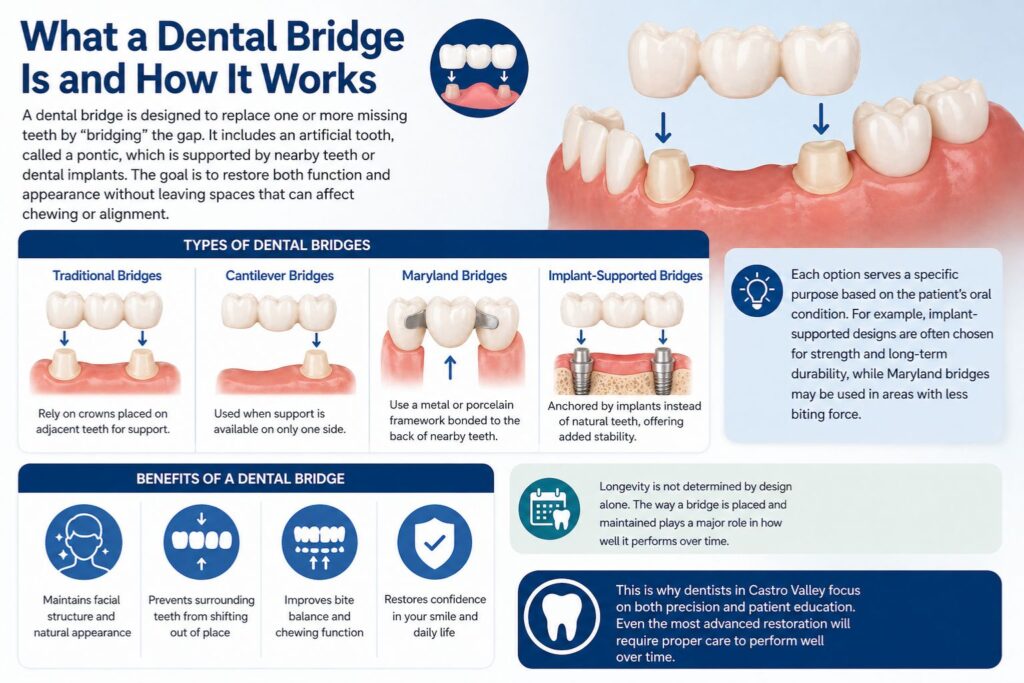
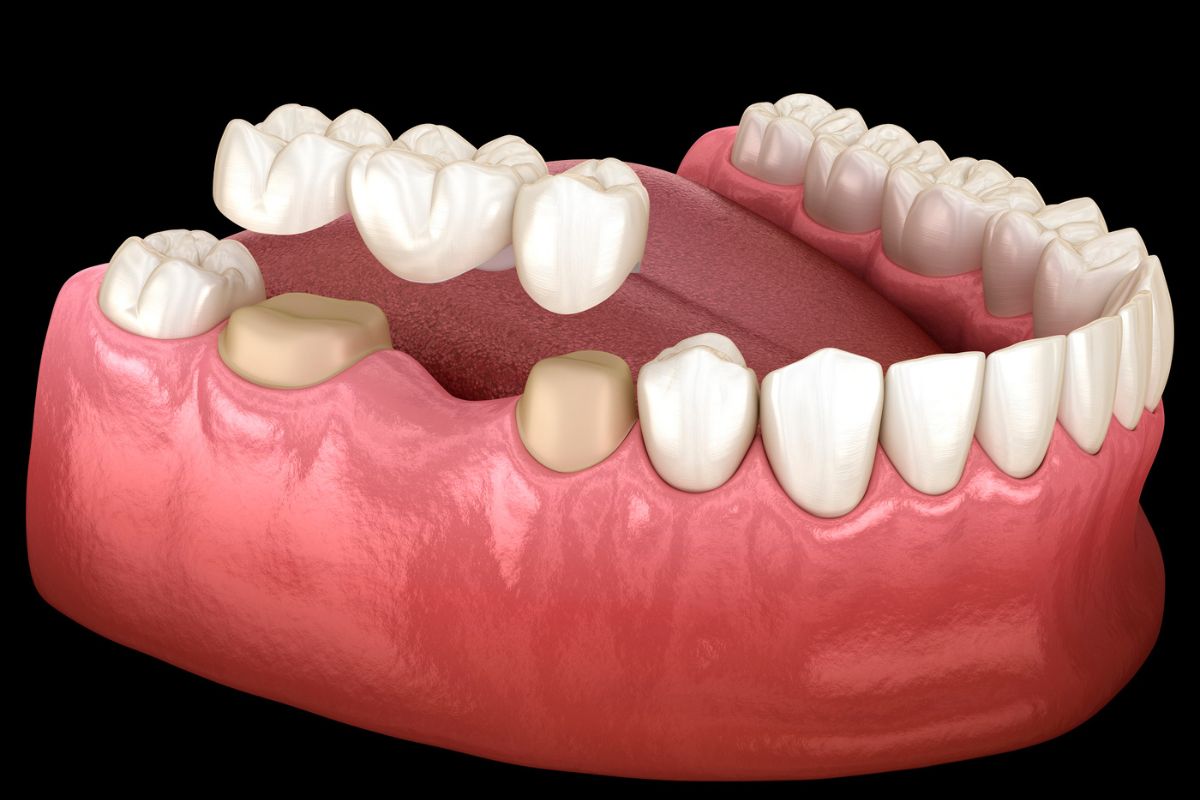
A dental bridge is designed to replace one or more missing teeth by “bridging” the gap. It includes an artificial tooth, called a pontic, which is supported by nearby teeth or dental implants. The goal is to restore both function and appearance without leaving spaces that can affect chewing or alignment.
There are several types of bridges used in modern dentistry:
- Traditional bridges rely on crowns placed on adjacent teeth for support.
- Cantilever bridges are used when support is available on only one side.
- Maryland bridges use a metal or porcelain framework bonded to the back of nearby teeth.
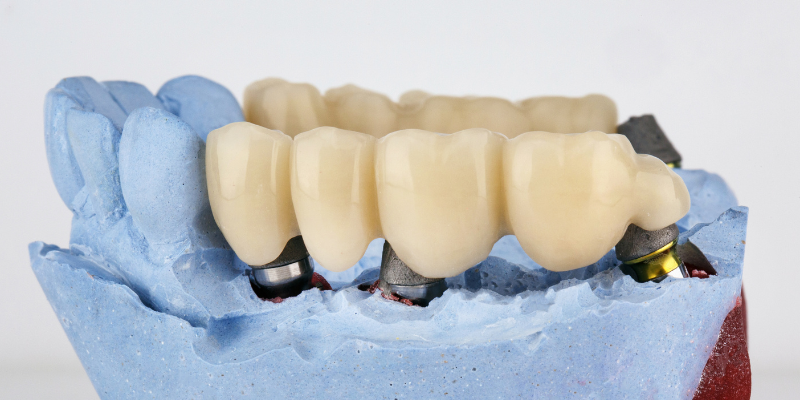
- Implant-supported bridges are anchored by implants instead of natural teeth, offering added stability.
Each option serves a specific purpose based on the patient’s oral condition. For example, implant-supported designs are often chosen for strength and long-term durability, while Maryland bridges may be used in areas with less biting force.
Beyond filling a gap, a bridge helps maintain facial structure, keeps surrounding teeth from shifting, and improves bite balance. However, longevity is not determined by design alone. The way it is placed and maintained plays a major role.
This is why dentists in Castro Valley focus on both precision and patient education. Even the most advanced restoration will require proper care to perform well over time.
Average Lifespan of Dental Bridges
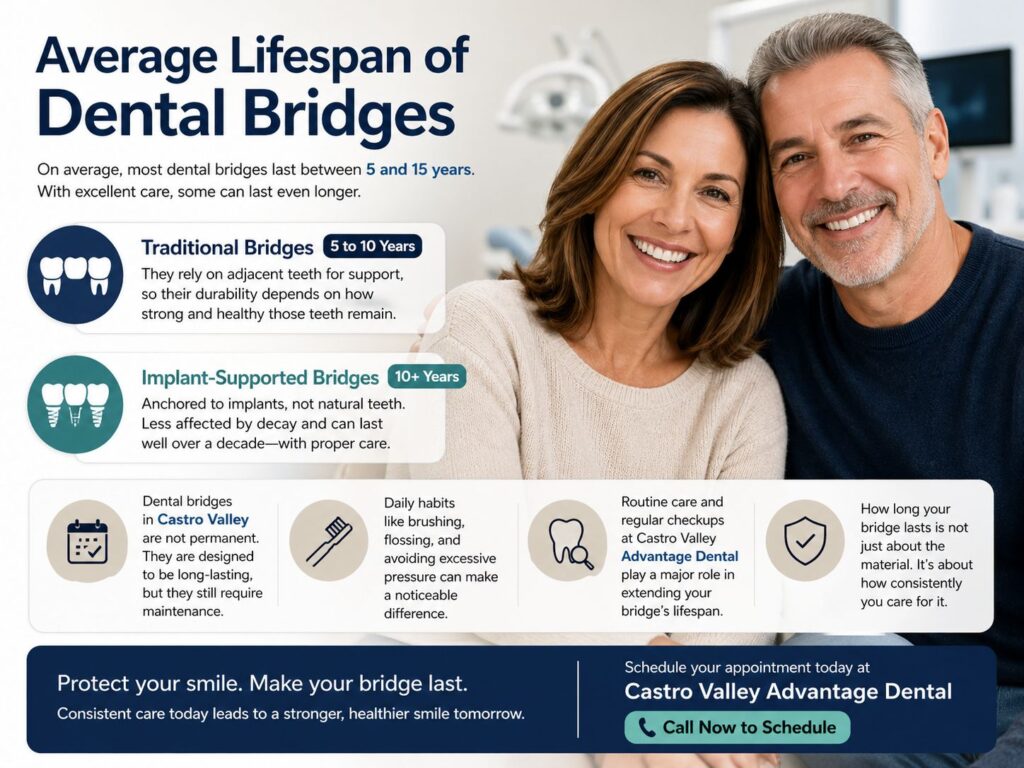
On average, most dental bridges last between 5 and 15 years. With excellent care, some can last even longer. However, the lifespan varies depending on the type used and how well the surrounding teeth and gums remain healthy.
Traditional bridges often fall within the 5 to 10-year range. They rely on adjacent teeth for support, so their durability depends heavily on how strong and healthy those teeth remain. If decay or gum issues develop, the bridge may need to be replaced sooner.
Implant-supported bridges generally last longer. Since they are anchored to implants rather than natural teeth, they are less affected by decay. With proper care, they can function well for well over a decade, sometimes much longer.
It is important to understand that dental bridges in Castro Valley are not permanent. They are designed to be long-lasting, but they still require maintenance. Daily habits such as brushing, flossing, and avoiding excessive pressure can make a noticeable difference.
Local patients often assume that once a bridge is placed, no further attention is needed. In reality, routine care and regular checkups at a Castro Valley practice play a major role in extending its lifespan.
In simple terms, how long your bridge lasts is not just about the material. It is about how consistently you care for it.
Key Factors That Affect How Long a Dental Bridge Lasts
Oral Hygiene Habits
Good oral hygiene is one of the most important factors. Plaque buildup around the supporting teeth can lead to decay or gum issues. If the anchor teeth weaken, the bridge may fail. Daily brushing and proper flossing help prevent these complications.
Quality of Materials Used
Bridges can be made from porcelain, metal, or zirconia. Each material offers different levels of strength and durability. High-quality materials tend to resist wear better and maintain their appearance longer.
Placement and Dental Expertise
A well-fitted bridge distributes bite pressure evenly. Poor alignment can cause stress on certain areas, leading to early damage. This is why professional placement is essential. Precision matters at every step, from preparation to final fitting.
Lifestyle Habits
Habits such as grinding teeth, chewing ice, or biting hard objects can shorten the lifespan of a bridge. Smoking may also affect gum health, which in turn impacts stability. These factors often go unnoticed but can significantly influence durability.
Health of Supporting Teeth and Gums
The condition of the surrounding teeth and gums directly affects how long a bridge lasts. Gum disease can weaken the foundation, while untreated cavities in anchor teeth can lead to failure. Healthy support structures are essential for long-term success.
Patients in Castro Valley often benefit from personalized guidance on how their daily habits impact dental work. Small changes can make a meaningful difference over time.
Signs Your Dental Bridge May Need Replacement
Even well-maintained dental bridges in Castro Valley will eventually show signs of wear. Recognizing these early can help prevent more complex issues.
A loose or shifting bridge is one of the most common warning signs. If it no longer feels stable, it may not be providing proper support. Discomfort while chewing is another indicator that something is not functioning as it should.
Visible cracks or wear on the surface can also signal that the material is weakening. Over time, even strong materials can show signs of stress. Gum recession around the bridge is another concern, as it may expose margins and create spaces for bacteria.
Some patients notice a persistent bad taste or odor. This can be a sign of decay developing underneath the bridge, especially if cleaning has been difficult.
Regular checkups make it easier to catch these issues early. A quick evaluation at Castro Valley Advantage Dental can determine whether a simple adjustment is enough or if replacement is needed. Acting early often prevents more extensive treatment later.
Daily Maintenance Tips to Extend the Life of Your Dental Bridge
Brush and Floss Properly
Use a soft-bristle toothbrush to clean around the bridge without causing damage. Floss threaders or water flossers help clean underneath the pontic where regular floss cannot reach easily.
Use Recommended Dental Tools
Interdental brushes can remove debris from tight spaces. An antibacterial mouthwash helps reduce bacteria and supports gum health.
Avoid Damaging Habits
Chewing ice, pens, or very hard foods puts unnecessary pressure on the bridge. Being mindful of these habits can prevent cracks or loosening.
Wear a Nightguard if Needed
If you grind your teeth at night, a custom nightguard can protect both your natural teeth and your bridge from excess force.
Schedule Regular Dental Visits
Routine visits allow your dentist to monitor the condition of the bridge and surrounding tissues. Professional cleanings also remove buildup that daily care may miss.
Consistent care does not require complex routines. It simply requires attention and consistency.
Professional Care and Long-Term Monitoring
Routine dental visits are essential for maintaining long-term results. During these visits, your dentist checks the fit, alignment, and condition of your restoration. Early signs of wear or gum changes can be addressed before they become serious problems.
Professional cleanings also play a role. They remove plaque and tartar that can build up in hard-to-reach areas. This helps protect both the bridge and the supporting teeth.
Sometimes, minor adjustments are needed to improve comfort or bite alignment. These small corrections can extend the lifespan significantly.
At Castro Valley Advantage Dental, ongoing monitoring ensures that each patient receives care tailored to their needs. Preventive care is always easier than corrective treatment, and regular visits help maintain that balance.
How to Make Your Dental Bridge Last Longer
- Maintain consistent oral hygiene every day
- Avoid habits that put excess pressure on your teeth
- Visit your dentist regularly for checkups
- Address any discomfort or changes early
Simple steps like these can extend the life of your restoration and help you avoid unnecessary complications.
A dental bridge is a dependable way to restore your smile and improve daily function. While it is not designed to last forever, it can serve you well for many years with proper care. The key lies in consistency, awareness, and timely professional support.
Patients in Castro Valley often find that small daily habits make the biggest difference over time. With the right approach, your restoration can remain comfortable, stable, and effective for years to come.
If you are considering treatment or want to check the condition of your current bridge, scheduling a visit with Castro Valley Advantage Dental is a practical next step toward protecting your smile.
What People Want to Know
How long does a dental bridge usually last?
Most dental bridges last between 5 and 15 years. With proper care, some can last even longer. Daily oral hygiene, regular dental visits, and avoiding damaging habits all help extend their lifespan.
Can a dental bridge last 20 years or more?
Yes, in some cases, a dental bridge can last 20 years or longer. This depends on excellent oral care, strong supporting teeth, and routine dental checkups to prevent issues like decay or gum disease.
What causes a dental bridge to fail early?
Common causes include poor oral hygiene, decay in supporting teeth, gum disease, and habits like teeth grinding or chewing hard foods. Improper placement or bite alignment can also shorten the lifespan of a bridge.
How do I clean under a dental bridge?
You can clean under a dental bridge using floss threaders, water flossers, or interdental brushes. These tools help remove food particles and plaque from areas that regular brushing cannot reach effectively.
Can I eat normally with a dental bridge?
Yes, you can eat most foods comfortably with a dental bridge. However, it is best to avoid very hard or sticky foods that can damage or loosen the bridge over time.