3609 Jamison Way Castro Valley, CA 94546


Are you worried about how long your dental crowns will last? You’re not alone. Many patients invest in dental crowns to restore the function and appearance of their teeth, but it’s important to understand how long these restorations will remain effective. Dental crowns can be an essential part of your oral health, offering protection and an aesthetically pleasing smile. But just like any other dental treatment, they require proper care to ensure longevity.
In this blog, we’ll answer the all-important question: How long do dental crowns last? Plus, we’ll share tips on how you can extend their lifespan and keep your smile looking its best.
What Are Dental Crowns?
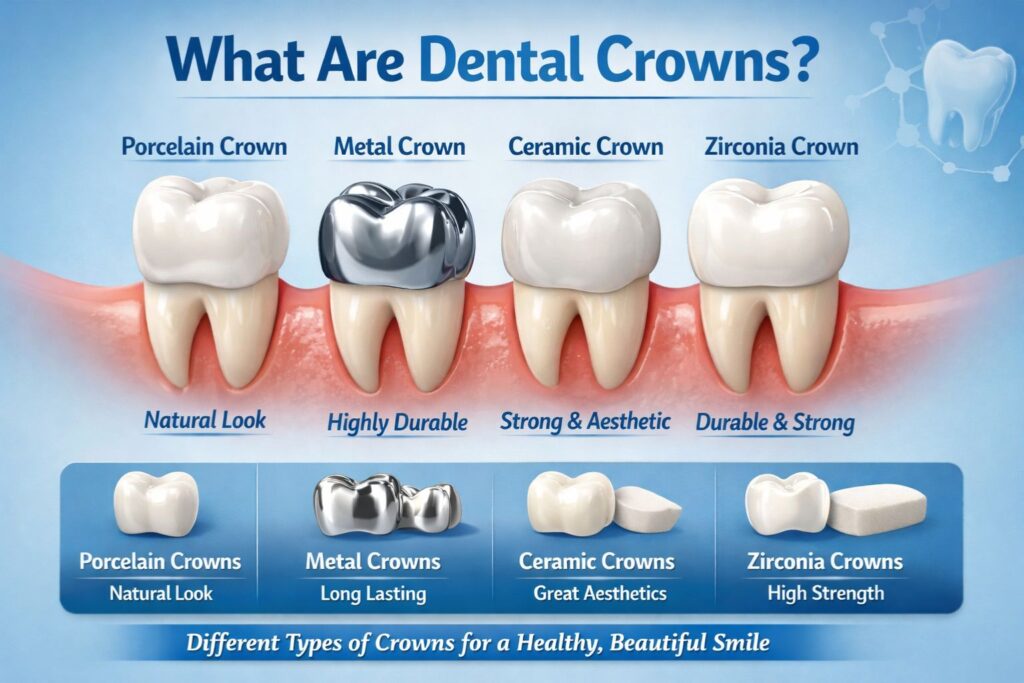
Dental crowns are protective caps placed over damaged or weakened teeth. They help restore the tooth’s shape, size, strength, and appearance, providing essential protection for teeth that have suffered decay, cracking, or wear. Crowns are custom-made to fit snugly over the tooth, offering a seamless, natural-looking result.
There are several types of crowns, and each one comes with its own set of benefits and lifespan expectations:
- Porcelain Crowns: Known for their natural look, porcelain crowns are ideal for teeth that are visible when you smile. They blend seamlessly with your natural teeth, making them an excellent choice for front teeth. However, porcelain crowns can be more susceptible to chips or fractures if not properly cared for.
- Metal Crowns: Made from materials like gold or other alloys, metal crowns are incredibly durable and less likely to wear down. They’re typically used for molars and teeth that are less visible. Their longevity and strength make them an excellent option for back teeth.
- Ceramic Crowns: Ceramic crowns are similar to porcelain but are slightly more durable. They offer a natural appearance and are a great choice for front teeth.
- Zirconia Crowns: A more modern option, zirconia crowns combine durability with aesthetic appeal. They are often chosen for both front and back teeth because of their strength and natural appearance.
The choice of crown material impacts both the aesthetic outcome and the lifespan of the dental crowns in Castro Valley.
How Long Do Dental Crowns Typically Last?
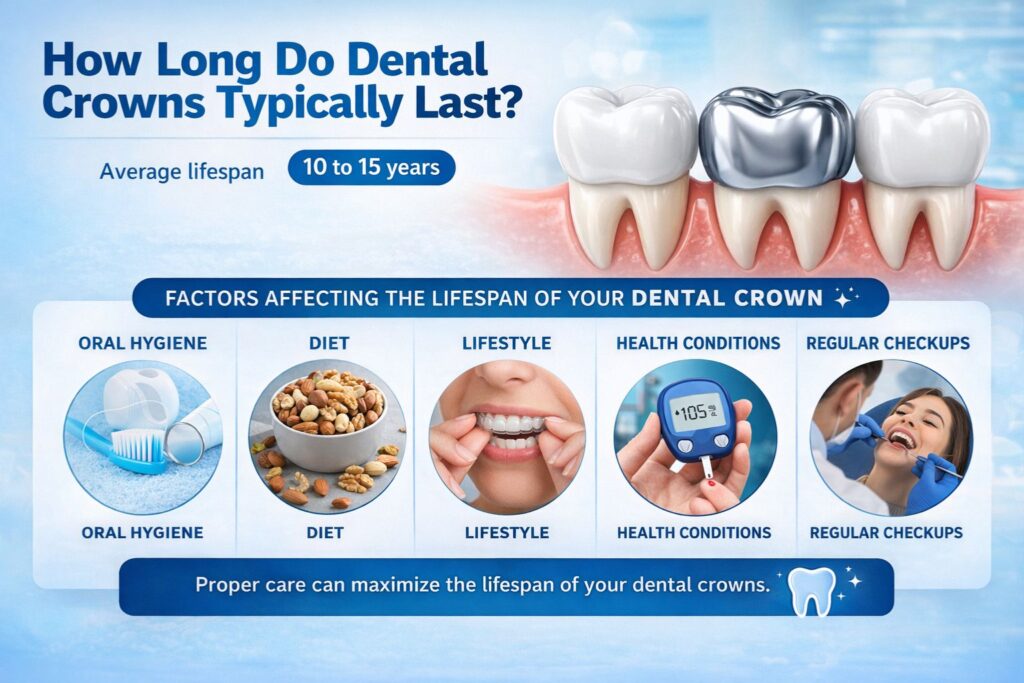
On average, dental crowns can last anywhere from 10 to 15 years, with some lasting even longer with proper care. However, several factors influence how long your crowns will remain effective. The material of the crown plays a significant role. For example, porcelain may wear out more quickly than metal crowns, which are known for their durability.
Other factors that affect the lifespan of your dental crown include:
- Oral Hygiene: Proper brushing, flossing, and regular dental checkups are essential to ensure your crowns last as long as possible. Poor hygiene can lead to plaque buildup, which can damage the crown and cause decay underneath.
- Diet: Foods that are overly hard or sticky can put unnecessary stress on your crowns, leading to premature wear or even cracking.
- Lifestyle: Habits like teeth grinding (bruxism) or nail-biting can significantly reduce the lifespan of your dental crowns.
- Health Conditions: Some health issues, such as severe gum disease or diabetes, can affect the longevity of dental crowns by compromising the surrounding gum tissue or slowing the healing process.
Factors That Affect the Longevity of Dental Crowns
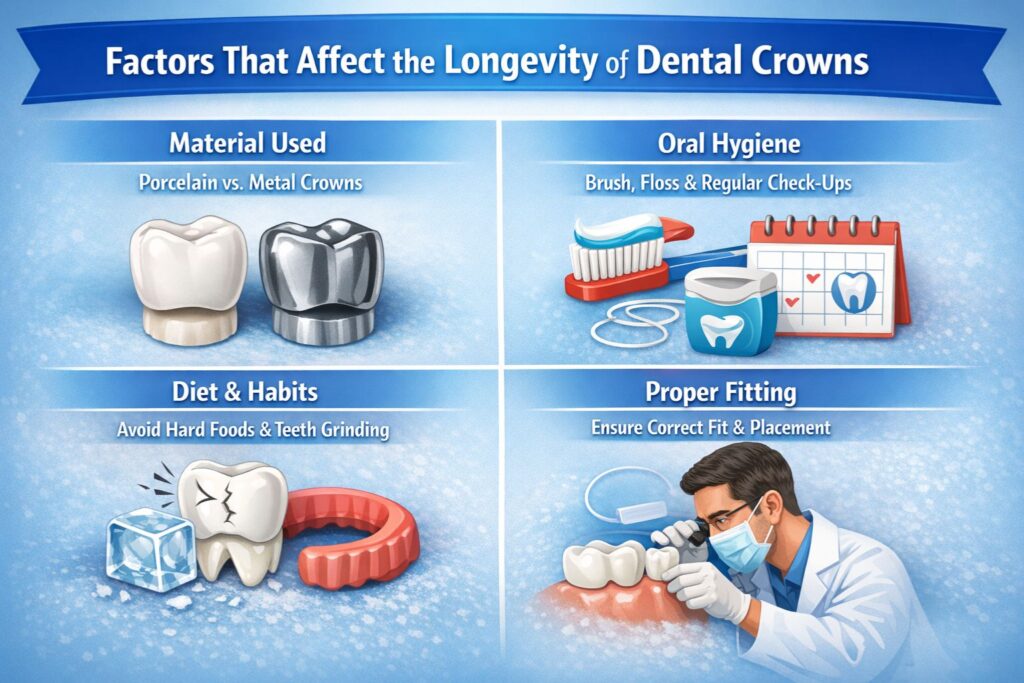
Several factors can influence how long your dental crown lasts. Here’s a closer look at the most significant ones:
- Material Used: As mentioned earlier, the material chosen for your crown greatly impacts its longevity. Porcelain crowns may not last as long as metal ones, but they offer a more natural look. Metal crowns, on the other hand, are highly durable but may not be as aesthetically pleasing for those visible teeth.
- Oral Hygiene: Just like with natural teeth, maintaining proper oral hygiene is essential for the longevity of your crown. Brushing twice a day, flossing regularly, and visiting your dentist at least twice a year are necessary steps to keep your crowns healthy.
- Diet and Habits: Consuming hard foods like ice or sticky candy can damage your dental crown. If you grind your teeth at night, consider getting a mouthguard to protect your crown and other teeth.
- Proper Fitting and Placement: The longevity of your dental crown is also dependent on how well it fits your tooth. A poorly placed crown may cause discomfort, bite problems, or damage to surrounding teeth. It’s crucial to have your crown placed by a qualified dentist like Castro Valley Advantage Dental, who can ensure a proper fit and alignment.
How to Extend the Life of Your Dental Crowns
If you want your dental crowns to last as long as possible, there are a few simple steps you can follow:
- Regular Dental Check-ups: Consistent visits to your dentist allow for regular monitoring of your crown’s condition. Your dentist can spot any potential issues early on and take preventive action before the problem worsens.
- Avoid Hard or Sticky Foods: Crunching on ice or biting into hard candies can cause your dental crown to crack or break. Stick to softer foods and avoid chewing on things that could harm your crown.
- Good Oral Hygiene: Brush your teeth at least twice a day and floss daily to remove plaque and food particles. Use fluoride toothpaste to help prevent cavities around the crown and ensure the surrounding tooth remains healthy.
- Wear a Mouthguard: If you’re prone to grinding your teeth, especially at night, a mouthguard can help protect your crowns and natural teeth from wear and tear.
- Address Any Issues Promptly: If you notice any discomfort, loosening, or damage to your crown, don’t wait. Contact your dentist immediately to prevent further damage.
Signs Your Dental Crown Needs Attention
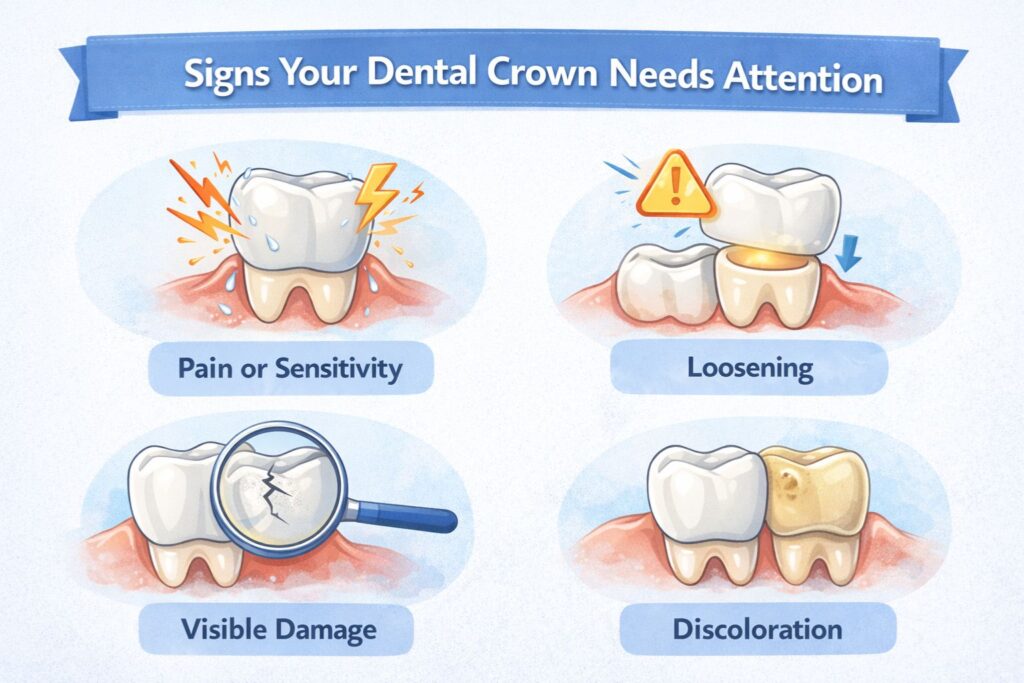
Knowing when to replace or repair your dental crown is essential for preventing further dental issues. Here are some common signs that may indicate your crown needs attention:
- Pain or Sensitivity: If you experience pain or sensitivity in the tooth with the crown, it may be a sign that the crown is damaged or there’s decay underneath it.
- Loosening: If the crown feels loose or moves when you touch it, this could mean the cement holding it in place has weakened, or the crown has become damaged.
- Visible Damage: Cracks or chips in the crown may affect its ability to function properly. It’s crucial to get these checked and repaired before they worsen.
- Discoloration: If your crown starts to change color or the surrounding tooth becomes discolored, it could be a sign that the crown is beginning to fail.
What Happens If You Don’t Take Care of Your Crown?
Neglecting proper care of your dental crowns in Castro Valley can lead to several issues:
- Crown Damage: Without proper care, crowns can crack, chip, or even fall out, leading to the need for expensive repairs or replacements.
- Tooth Decay: If bacteria and plaque accumulate around the crown, it can lead to tooth decay under the crown. This can further damage your tooth and lead to more serious complications.
- More Costly Repairs: Failing to maintain your dental crown can lead to additional dental problems that require more costly procedures like root canals or tooth extractions.
When to Replace Your Dental Crown
It’s time to replace your dental crown when it becomes damaged beyond repair or when it no longer fits properly. If your crown is chipped, cracked, or loose, a replacement may be necessary to prevent further complications. Additionally, if the tooth underneath the crown has become decayed, your dentist may recommend replacing the crown to protect your oral health.
Understanding the lifespan of dental crowns and how to extend their life is essential for maintaining a healthy, functional smile. Regular dental check-ups, good oral hygiene, and being mindful of your diet can significantly prolong the life of your crowns.
If you’re concerned about the condition of your dental crowns or need a replacement, don’t hesitate to contact Castro Valley Advantage Dental today for a consultation. Your smile is worth the investment, and we’re here to help keep it looking great for years to come!
What People Want to Know
What happens if my dental crown becomes loose?
If your dental crown becomes loose, it’s important to see your dentist immediately to prevent further damage to the crown or underlying tooth.
Can I whiten my dental crown?
Dental crowns cannot be whitened like natural teeth. If your crown discolors, it may need to be replaced.
Do dental crowns require special care?
Dental crowns don’t require special care, but maintaining good oral hygiene and avoiding foods that can damage them helps extend their lifespan.
Can my diet affect the lifespan of my dental crown?
Yes, eating hard or sticky foods can damage your dental crown. It’s best to avoid items like ice, caramel, or hard candies to protect your crown.
Can I chew normally with a dental crown?
Yes, after your dental crown is properly placed, you can chew normally. However, it’s best to avoid chewing on hard objects like ice or pens to prevent damage.