3609 Jamison Way Castro Valley, CA 94546


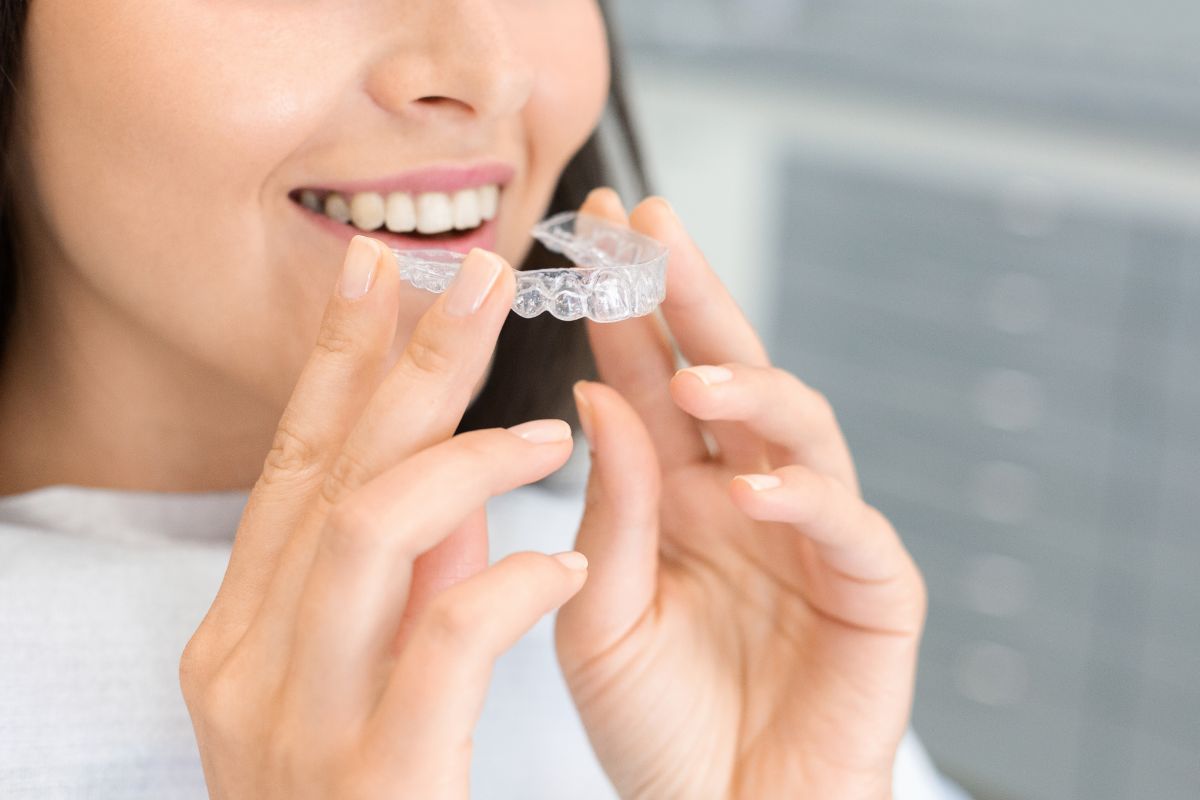
Clear aligner therapy has changed how people approach orthodontic care. Many adults and teens today want straighter teeth without the look of traditional braces. Invisalign has become a popular solution because it uses transparent aligners that gradually guide teeth into better positions while allowing patients to maintain their normal routines.
However, many people assume Invisalign only fixes minor cosmetic concerns. In reality, it can correct several common alignment problems that affect both oral health and daily comfort. Crooked teeth, bite issues, and gaps can make cleaning more difficult and may contribute to uneven tooth wear or jaw strain over time.
Modern orthodontic technology now allows dental Invisalign treatment to address a wider range of alignment concerns than many patients realize. This blog explains the dental problems Invisalign can correct and why addressing these issues can improve both your smile and your long-term oral health.
How Invisalign Works to Correct Teeth Alignment
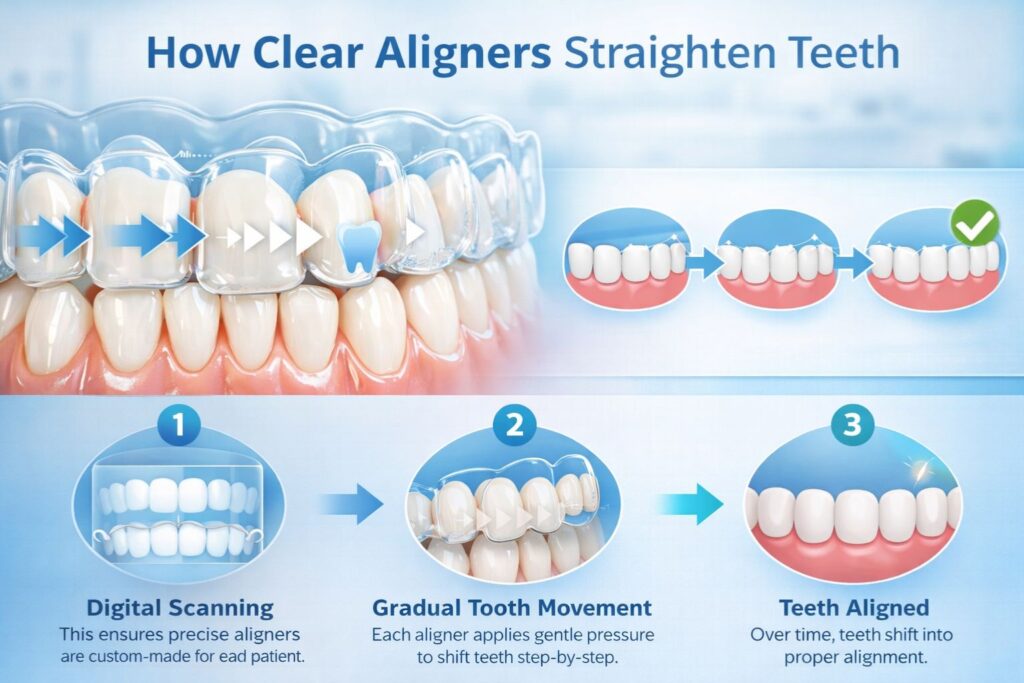
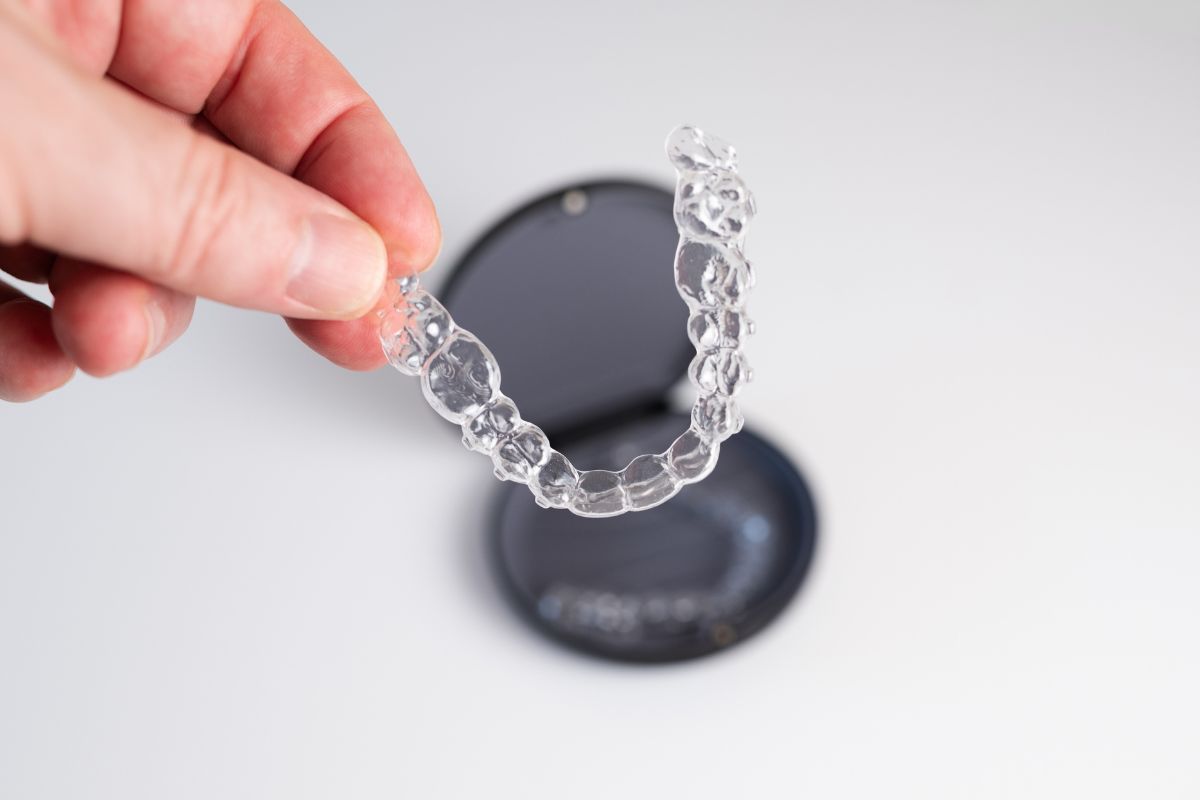
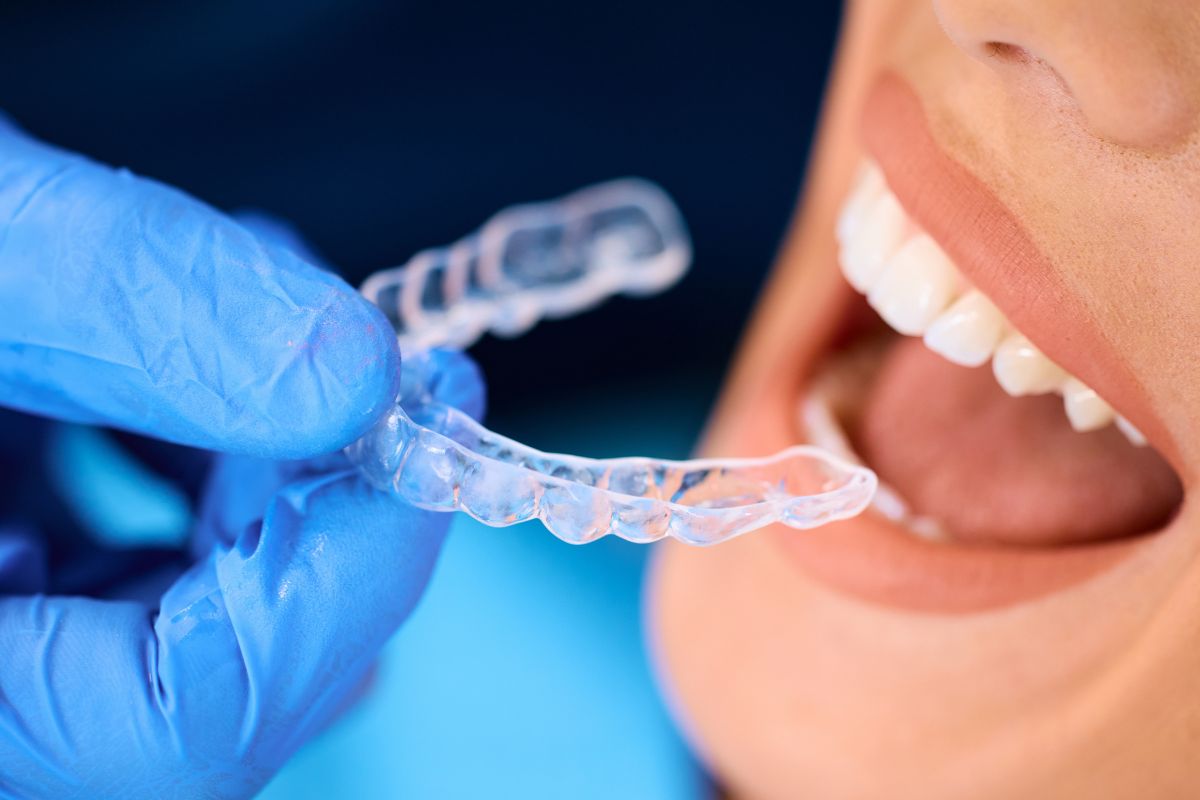
Invisalign treatment works through a series of custom-made clear aligners designed specifically for each patient. These aligners fit snugly over the teeth and apply gentle pressure that gradually shifts teeth into proper alignment. Unlike traditional braces that rely on metal brackets and wires, Invisalign aligners are smooth, removable trays that many patients find easier to manage in daily life.
Treatment begins with digital scanning and advanced planning software. This technology allows the dental team to map the movement of each tooth and create a series of aligners that guide teeth step by step toward the final result. Each set of trays is typically worn for one to two weeks before moving on to the next set in the series.
The aligners move teeth in small, predictable increments. Because the adjustments are gradual, most patients experience only mild pressure when switching to a new set of trays. Over time, these small movements add up to noticeable improvements in alignment and bite function.
Patients are usually advised to wear dental Invisalign in Castro Valley for about 20 to 22 hours per day. They can remove them for meals, brushing, and flossing, which makes maintaining oral hygiene easier compared with fixed braces.
Many adults in Castro Valley appreciate that aligners are discreet enough for work meetings, social gatherings, or events around town, such as weekend visits to Lake Chabot Regional Park or dining along Castro Valley Boulevard. With proper planning and consistent wear, aligner therapy can deliver predictable orthodontic results while fitting comfortably into modern lifestyles.
Dental Problems That Clear Aligners Can Address
Crooked or Misaligned Teeth
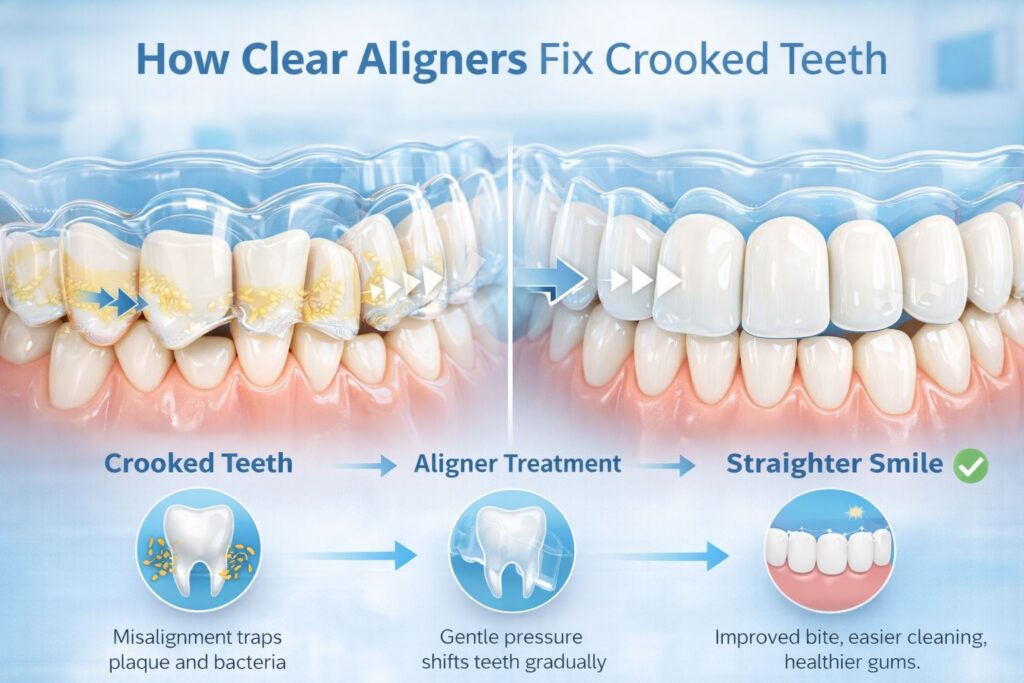
Crooked teeth are one of the most common orthodontic concerns treated with aligner therapy. When teeth are not properly aligned, plaque and bacteria can collect in areas that are difficult to reach with a toothbrush or floss. Over time, this buildup can increase the likelihood of cavities and gum inflammation.
Aligners gradually apply controlled pressure that guides crooked teeth into better positions. As the teeth shift, spacing improves, and oral hygiene becomes easier to maintain. Straighter teeth also help distribute bite pressure more evenly, which can reduce unnecessary stress on individual teeth.
Correcting crooked teeth does more than improve appearance. It also supports healthier gums, better chewing function, and a more balanced bite.
Overcrowded Teeth
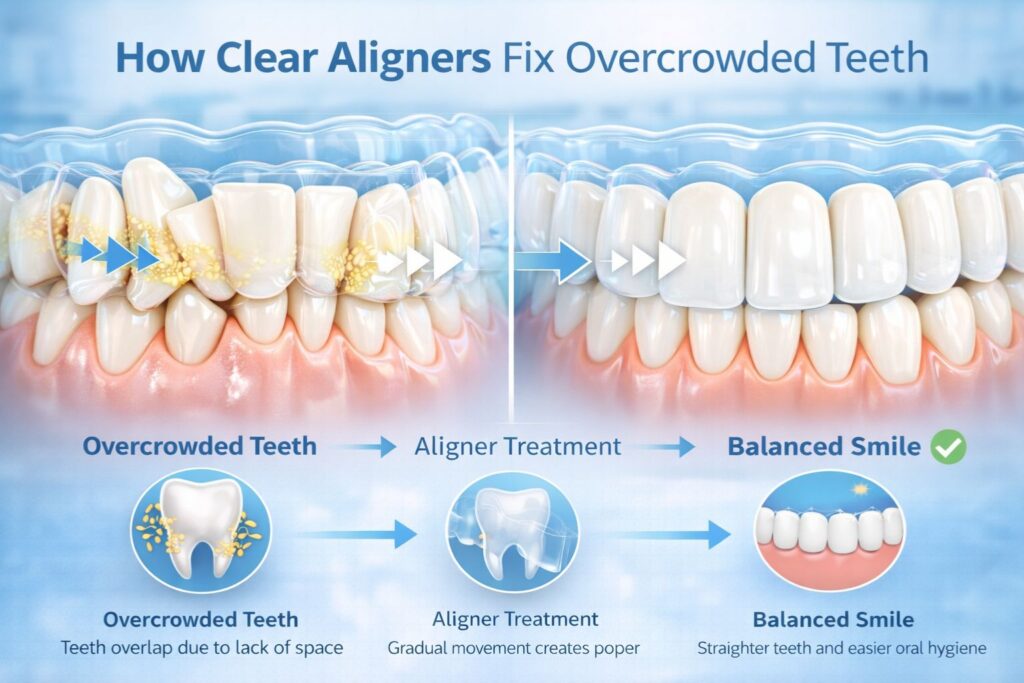
Overcrowding occurs when there is not enough room in the jaw for all teeth to align properly. This can cause teeth to overlap or rotate, creating tight spaces where plaque and bacteria easily accumulate.
Crowded teeth often increase the risk of gum irritation and tooth decay because brushing and flossing may not reach certain areas effectively. Aligners gradually create space by shifting teeth into more organized positions within the arch.
In some situations, minor enamel reshaping may be recommended to help create the necessary room for teeth to move comfortably. When crowding is corrected, patients often notice that their smile appears more balanced and cleaning their teeth becomes much easier.
Gaps Between Teeth
Spaces between teeth can occur naturally or develop due to missing teeth, jaw growth patterns, or certain oral habits. While some small gaps may be purely cosmetic, larger spaces can trap food particles and contribute to gum irritation.
Aligners gradually move teeth closer together to close these gaps. As the spaces narrow, the smile often appears more uniform and bite function improves. Closing gaps can also reduce the chances of food debris collecting between teeth during meals.
For many patients, addressing gaps helps create a smoother smile line and supports healthier gum tissue.
Overbite (Upper Teeth Too Far Forward)
An overbite occurs when the upper front teeth overlap the lower teeth more than they should. While mild overbites are common, more pronounced cases can cause excessive pressure on certain teeth and may contribute to enamel wear over time.
Invisalign can gradually reposition the teeth and improve how the upper and lower arches meet. Small attachments placed on specific teeth may help guide movements that improve bite alignment.
Correcting an overbite often helps distribute chewing forces more evenly across the mouth, which can reduce strain on both teeth and jaw joints.
Underbite (Lower Teeth Extend Past Upper Teeth)
An underbite happens when the lower teeth extend beyond the upper teeth when the mouth is closed. This condition can make chewing uncomfortable and may affect overall facial balance.
Aligner therapy can help correct mild to moderate underbites by gradually repositioning teeth into better alignment. By guiding both upper and lower teeth into improved positions, patients may experience better bite function and a more balanced smile.
Severe underbites may require additional orthodontic approaches, but many mild cases respond well to clear aligner treatment.
Crossbite
A crossbite occurs when some upper teeth sit inside the lower teeth rather than slightly outside them during biting. This misalignment can cause uneven tooth wear and may even contribute to gum recession in certain areas.
Invisalign gradually guides teeth into the correct relationship so that the upper teeth align properly with the lower teeth. As the bite improves, pressure becomes more evenly distributed when chewing.
Addressing a crossbite early can help prevent long-term damage to both teeth and gum tissue.
Open Bite
An open bite occurs when the upper and lower teeth do not touch when the mouth closes. This often affects the front teeth and can make biting into foods such as sandwiches or apples difficult.
Open bites sometimes develop due to childhood habits like thumb sucking or tongue thrusting. Aligners can gradually guide teeth into positions that allow them to meet properly when biting.
When the bite closes correctly, patients often experience improved chewing efficiency and better overall bite balance.
Mild to Moderate Bite Concerns
Many bite issues fall into the mild to moderate category and respond well to aligner therapy. When treated early, these problems can often be corrected without the need for more complex orthodontic procedures.
A professional evaluation helps determine whether aligners are the right solution for a particular case. In some situations, dental Invisalign treatment may be combined with attachments or other techniques to improve results.
Who Is a Good Candidate for Invisalign?

Many teens and adults benefit from clear aligner therapy when they have mild to moderate alignment concerns. Ideal candidates typically include individuals who want to straighten their teeth while maintaining a natural appearance during treatment.
People who prefer removable orthodontic appliances often find aligners appealing because they can take them out when eating, brushing, or attending special events. This flexibility makes it easier to maintain normal oral hygiene routines and dietary habits.
Consistency is an important factor for success. Patients should be prepared to wear aligners approximately 20 to 22 hours each day to ensure steady progress. Skipping wear time can slow treatment or reduce effectiveness.
Regular dental checkups are also part of the process. During these visits, the dental team monitors tooth movement and ensures the aligners are guiding teeth as planned.
Many patients in Castro Valley appreciate that aligner therapy allows them to continue their active lifestyles while improving their smiles. Whether commuting to work, attending school, or enjoying weekends around the East Bay, the treatment fits comfortably into everyday routines.
Benefits of Addressing Alignment Concerns Early
Correcting alignment issues early can make a significant difference in long-term oral health. When teeth are properly positioned, daily brushing and flossing become much more effective. Plaque and bacteria are less likely to accumulate in tight spaces, reducing the risk of cavities and gum inflammation.
Proper alignment also improves chewing efficiency. When teeth meet evenly, food can be broken down more effectively, which may help support better digestion and overall comfort during meals.
Another benefit involves reducing strain on the jaw joints. Bite imbalances sometimes force certain teeth to absorb more pressure than others, which can lead to uneven wear. Aligning the teeth distributes forces more evenly across the mouth.
Finally, many patients notice increased confidence when their teeth are aligned. A balanced smile often encourages people to speak, laugh, and interact more freely in social or professional settings.
When Clear Aligners May Not Be the Best Option
While aligner therapy is effective for many orthodontic concerns, it may not be suitable for every situation. Severe bite problems or significant jaw misalignment sometimes require more advanced orthodontic treatment.
In certain cases, surgical orthodontics may be recommended to address skeletal issues that affect how the jaws fit together. Traditional braces may also be used when precise tooth movements are needed.
A comprehensive evaluation allows the dental team to determine whether dental Invisalign in Castro Valley is appropriate or if another orthodontic solution would provide better results. Honest recommendations help ensure patients receive the care that best fits their individual needs.
Invisalign therapy can address far more than simple cosmetic concerns. It can help correct crooked teeth, crowding, gaps, and several types of bite issues that affect both comfort and oral health. By guiding teeth into better alignment, this treatment supports healthier gums, improved chewing function, and a more balanced smile.
Early orthodontic care can prevent small alignment issues from becoming larger problems over time. If you are considering ways to improve your smile, a consultation can help determine whether aligner therapy is right for you.
At Castro Valley Advantage Dental, our team helps patients explore modern orthodontic solutions designed to fit their lifestyle and oral health needs. Schedule a visit today to learn how clear aligner treatment can help you achieve a healthier, more confident smile.
People Also Ask
How long does Invisalign treatment usually take?
Most Invisalign treatments take between 6 and 18 months, depending on the complexity of the alignment issue and how consistently the aligners are worn.
Is Invisalign suitable for adults?
Yes. Invisalign is widely used by adults who want a discreet orthodontic treatment that fits easily into professional and social settings.
Can Invisalign improve chewing function?
Yes. By correcting alignment and bite issues, Invisalign can help improve how teeth come together when chewing, making eating more comfortable.
Does Invisalign help improve oral hygiene?
Straightening teeth can make brushing and flossing easier. When teeth are properly aligned, it becomes easier to clean between them and maintain healthier gums.
Is Invisalign suitable for people with dental restorations?
Many patients with crowns, bridges, or veneers can still use Invisalign, but a dental evaluation is necessary to determine if treatment is appropriate.