3609 Jamison Way Castro Valley, CA 94546


Missing teeth can affect the way you eat, speak, and feel about your smile. Because of this, many people search for a dependable and long-lasting solution. Dental implants have become one of the most recommended treatments for replacing missing teeth, offering stability and a natural appearance.
A common question patients ask during consultations is simple: How long do dental implants actually last? The answer depends on several factors, including daily oral care, lifestyle habits, and routine dental visits. With the right maintenance, implants can remain functional for decades.
Patients exploring implant dentistry solutions often want to understand what affects implant longevity and how they can protect their investment. In communities like Castro Valley, where active lifestyles and good health matter, maintaining a strong smile is especially important.
This blog explains how implants work, how long they typically last, and practical maintenance tips that help keep them strong for years.
What Are Dental Implants and How Do They Work?
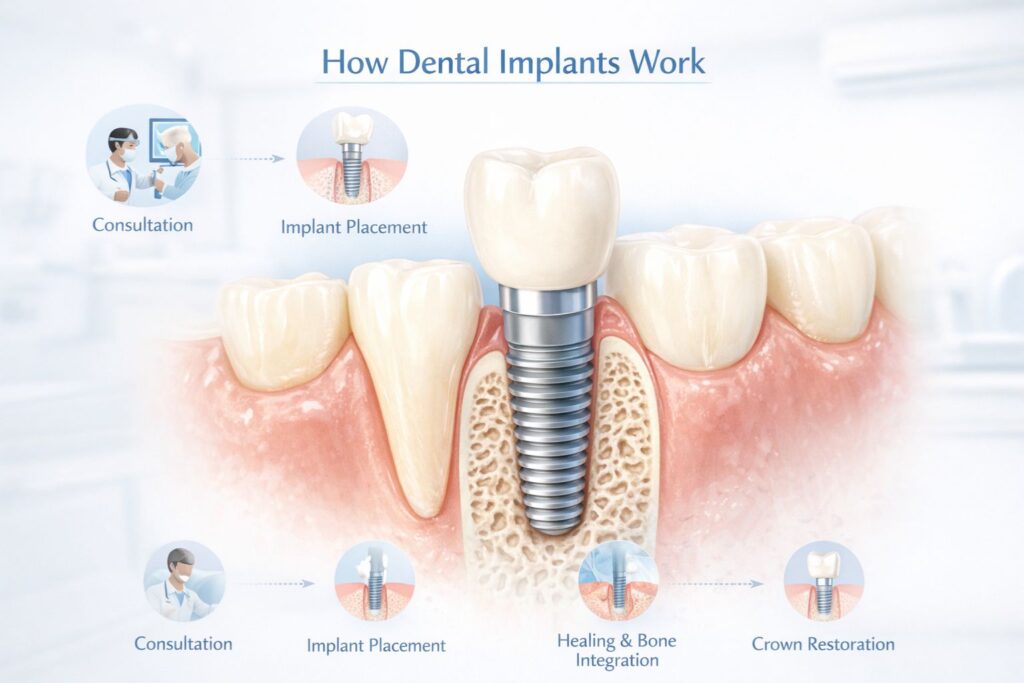
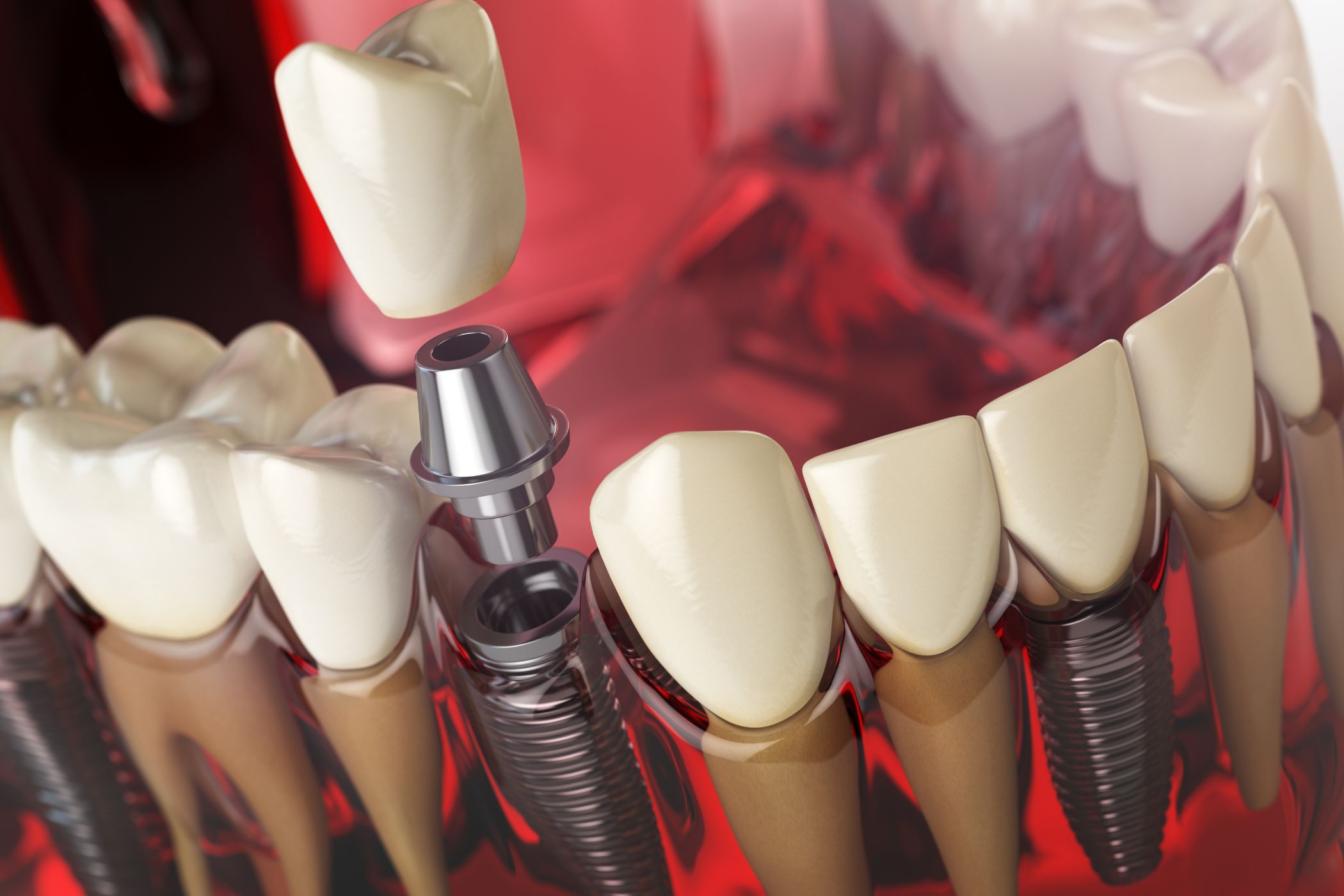
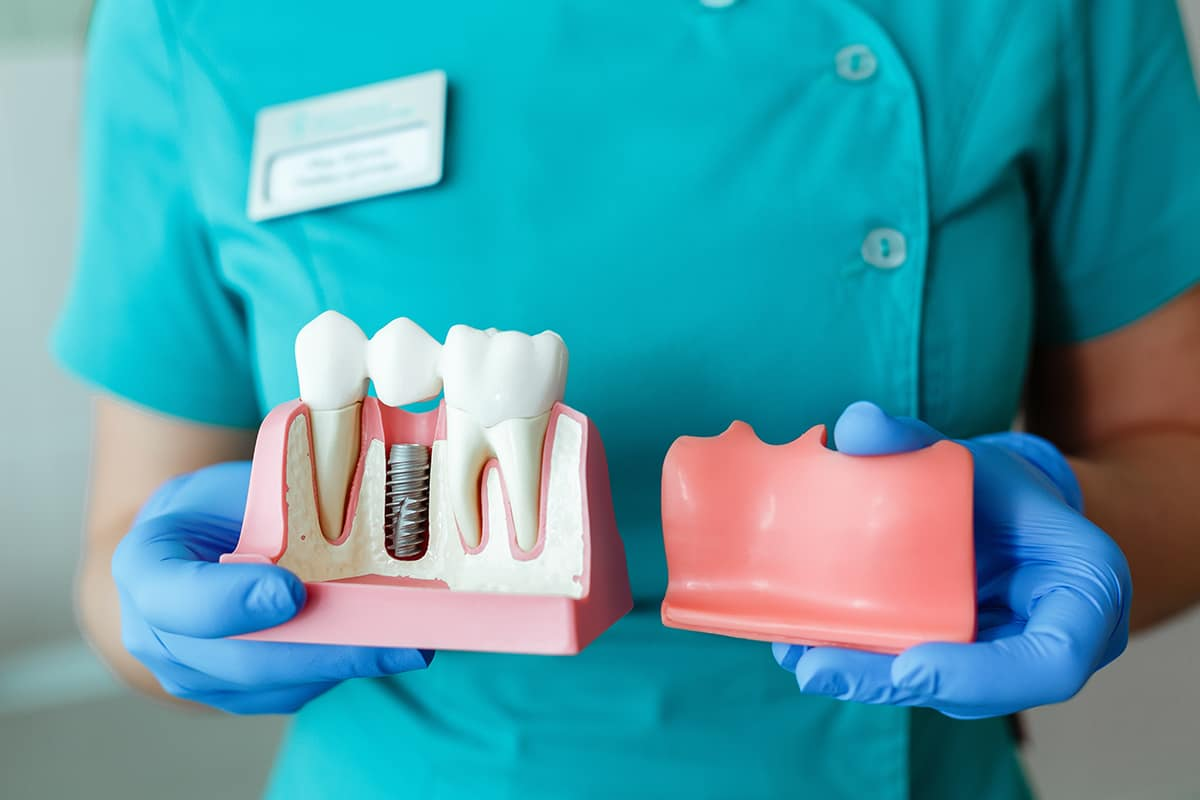
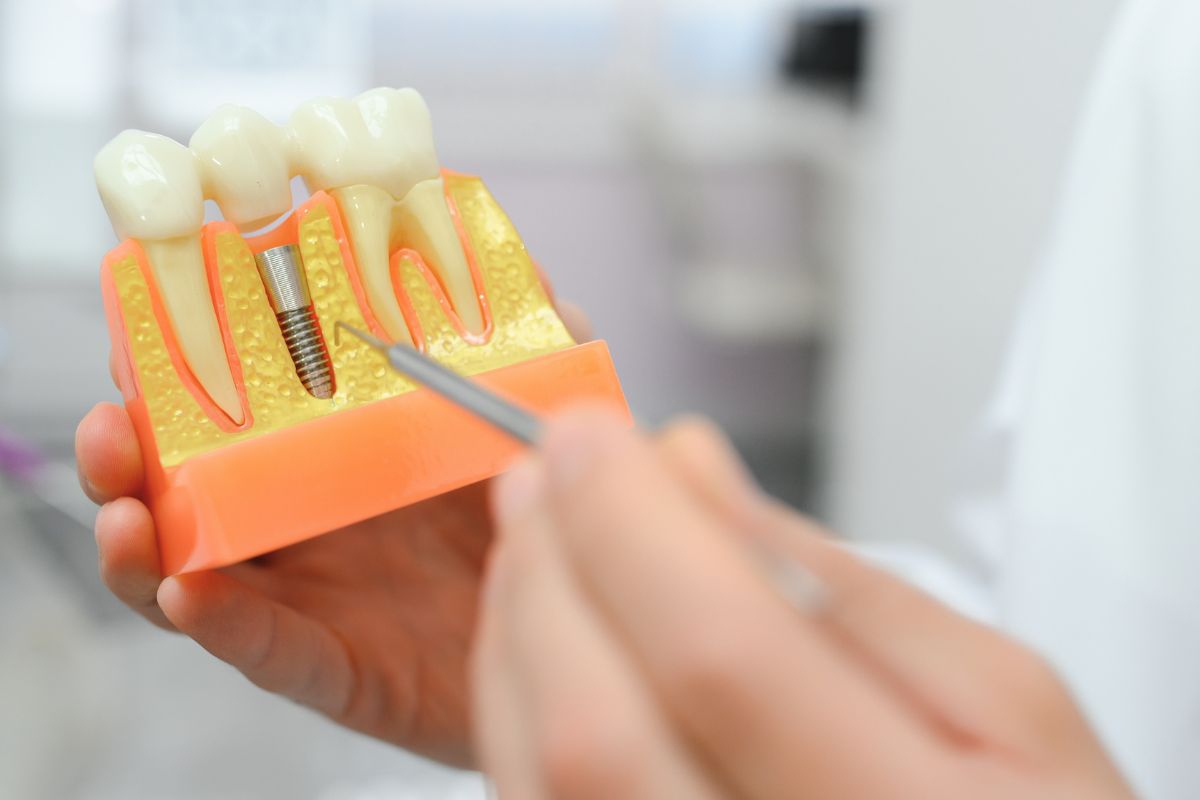
Dental implants are artificial tooth roots designed to replace missing teeth. They are usually made from titanium, a material known for its strength and compatibility with the human body. The implant is placed into the jawbone, where it acts as a stable foundation for a replacement tooth.
Once the implant is positioned, the surrounding bone gradually bonds with it through a process called osseointegration. This natural bonding process allows the implant to function much like a real tooth root. After healing, a custom restoration—such as a crown, bridge, or denture—is attached to restore appearance and function.
Many patients appreciate implants because they allow them to eat comfortably and maintain normal speech. Unlike removable restorations, implants stay securely in place.
The typical treatment process involves several steps:
- Consultation and treatment planning– A dentist evaluates bone health and overall oral condition.
- Implant placement surgery– The titanium post is carefully inserted into the jawbone.
- Healing and bone integration– The bone bonds with the implant over several months.
- Placement of the restoration– A crown or other restoration is attached to complete the smile.
Patients visiting Castro Valley Advantage Dental often ask about the stability of implants during consultations. The good news is that when placed properly and cared for consistently, implants provide reliable support for replacement teeth.
How Long Do Dental Implants Typically Last?
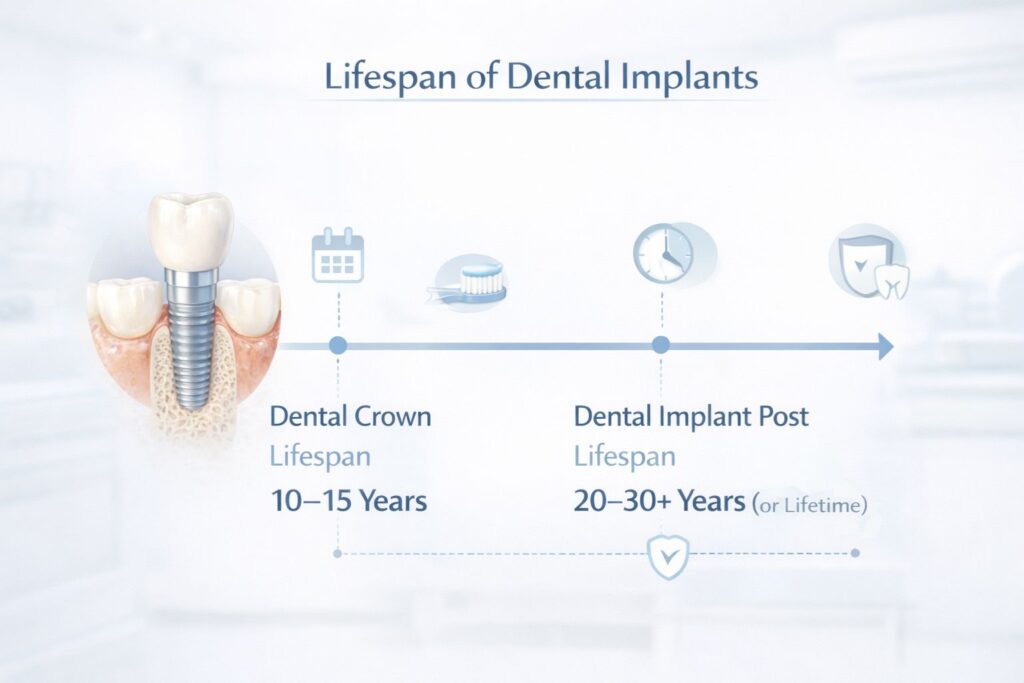
Dental implants are designed to be a long-term solution for tooth replacement. In many cases, the titanium implant post can last 20 to 30 years or even a lifetime. Their durability is one reason they are widely recommended for patients who want a stable and permanent restoration.
The restoration placed on top of the implant, usually a dental crown, may not last as long as the implant itself. Crowns typically last 10 to 15 years, depending on wear and oral habits. Over time, they may require replacement due to normal chewing pressure.
Clinical studies consistently report success rates above 95 percent for implants placed in healthy patients. This high success rate reflects both modern implant technology and improved treatment planning.
Long-term durability also depends on daily care and lifestyle habits. Patients who maintain strong oral hygiene and attend routine checkups often experience excellent results.
For residents in Castro Valley who enjoy local dining spots or community events around Castro Valley Boulevard, having a dependable restoration can make everyday activities more comfortable. Implants allow people to enjoy meals and conversations without worrying about shifting teeth or removable appliances.
Factors That Affect the Lifespan of Dental Implants
Oral Hygiene Habits
Daily oral care plays a major role in implant longevity. Plaque buildup around the gums can lead to inflammation, which may weaken the supporting bone over time. Brushing and flossing help protect both natural teeth and implants from harmful bacteria.
Gum Health
Healthy gums are essential for implant stability. Gum disease can cause bone loss around the implant site, increasing the risk of complications. Regular dental visits allow early detection and treatment of gum concerns.
Bone Density
The jawbone must be strong enough to support the implant. Adequate bone density ensures the implant remains stable under chewing pressure. In some cases, bone grafting procedures may be recommended to strengthen the area before implant placement.
Lifestyle Habits
Certain lifestyle habits can affect implant durability. Smoking reduces blood flow to gum tissue and slows healing, which may increase implant failure risk. Teeth grinding also places excessive pressure on restorations, potentially shortening their lifespan.
Implant Placement Quality
Proper planning and precise placement are critical for long-term success. Dentists evaluate bone structure, bite alignment, and overall oral health before beginning treatment. Advanced imaging and careful surgical techniques help ensure implants are positioned correctly.
Patients seeking dependable benefits of implant dentistry solutions in Castro Valley from comprehensive evaluations that consider all these factors before treatment begins.
Signs That a Dental Implant Is Healthy
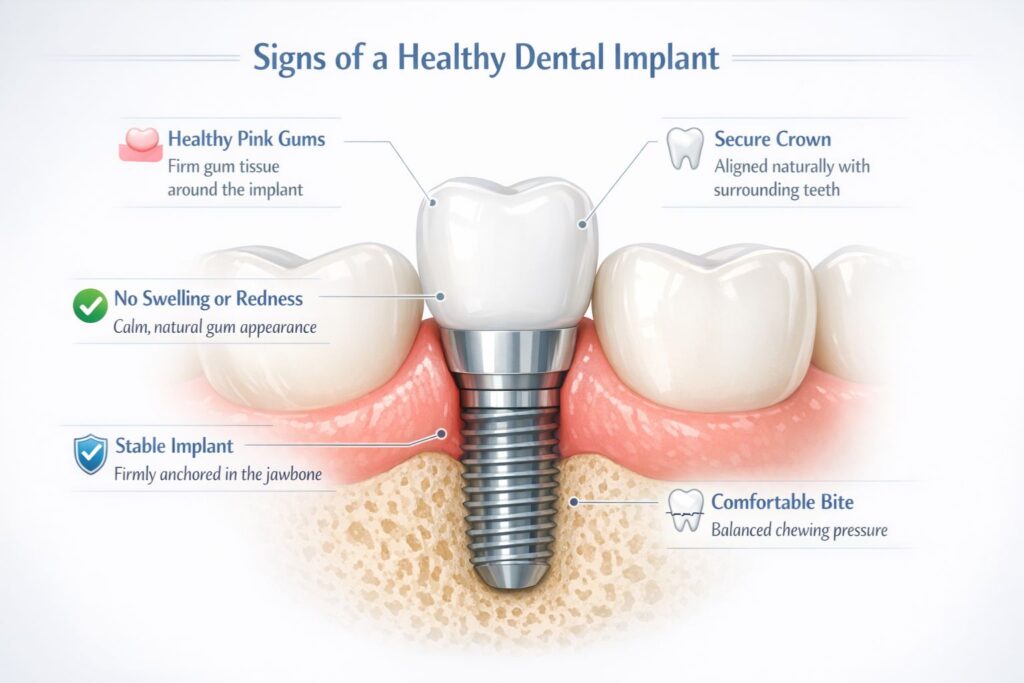
Once an implant has healed, it should feel natural and stable in the mouth. Healthy implants typically show several clear signs.
There should be no pain or swelling around the implant site during normal use. The surrounding gums should appear pink and firm rather than red or inflamed.
A well-functioning implant also feels secure while chewing. It should not shift or move under pressure. The crown attached to the implant should remain firmly in place and align comfortably with surrounding teeth.
Healthy gum tissue forms a tight seal around the implant. This seal helps protect the underlying bone from bacteria. Patients should also notice that their bite feels balanced when they chew or speak.
If symptoms such as discomfort, looseness, or swelling occur, a dental visit is recommended. Early attention can help resolve issues before they progress.
Maintenance Tips to Help Dental Implants Last Longer
Maintain Excellent Oral Hygiene
Daily brushing is essential for protecting implants and surrounding teeth. Patients should brush twice a day using a soft-bristle toothbrush. Cleaning carefully around the gumline helps prevent plaque buildup near the implant.
Floss or Use Interdental Cleaners
Flossing removes plaque between teeth and around implant restorations. Interdental brushes or water flossers may also help reach areas that are harder to clean with traditional floss.
Schedule Regular Dental Checkups
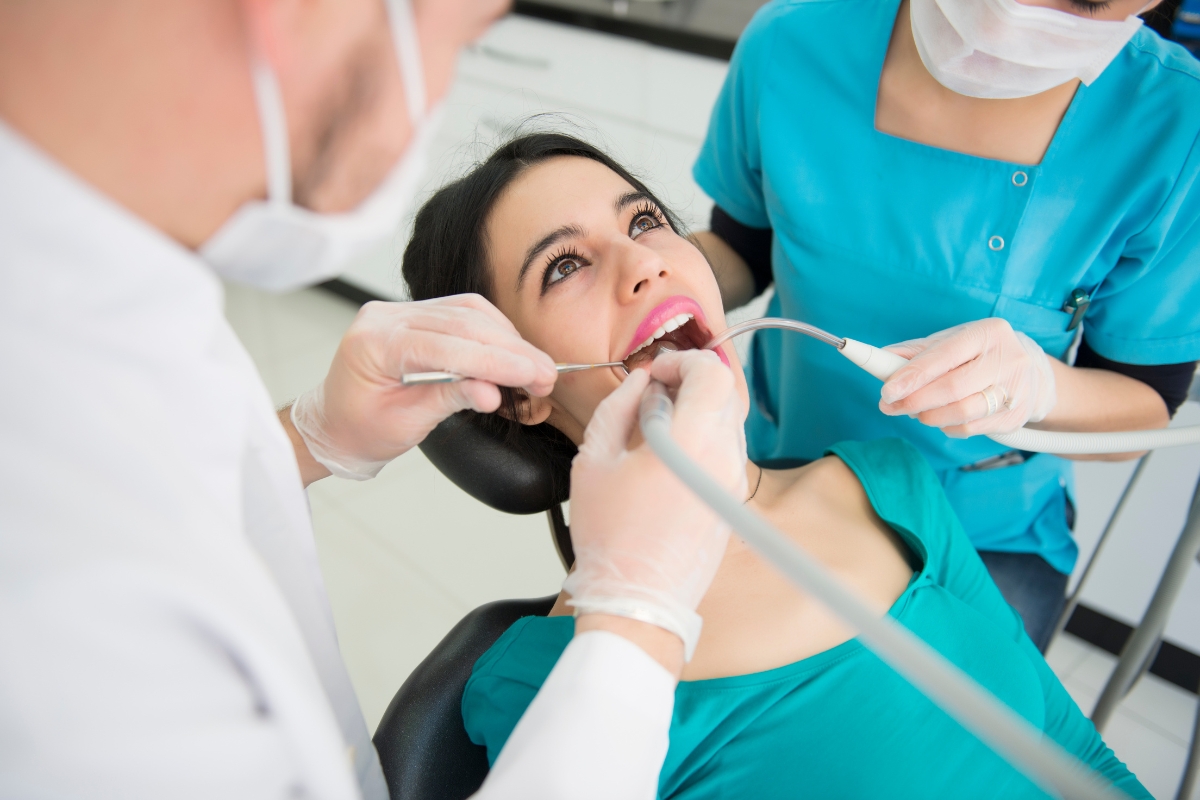
Routine dental visits allow professionals to monitor the condition of implants. During these appointments, the dentist checks for signs of inflammation, evaluates bite alignment, and performs professional cleanings to remove hardened plaque.
Avoid Smoking
Smoking can slow healing and increase the risk of implant complications. Reducing or eliminating tobacco use supports healthier gums and improves long-term outcomes.
Use a Night Guard if You Grind Teeth
Patients who grind their teeth during sleep may place excessive pressure on implants and restorations. A custom night guard helps distribute pressure evenly and protect dental work.
Many patients receiving implant dentistry solutions in Castro Valley are surprised to learn that implant care is very similar to caring for natural teeth. Consistent daily habits combined with routine dental visits can significantly extend the life of an implant restoration.
Residents of Castro Valley who stay active at nearby parks such as Lake Chabot Regional Park often appreciate how implants allow them to maintain a normal lifestyle without worrying about removable appliances.
Can Dental Implants Fail?
Although dental implants have a very high success rate, failure can occasionally occur. Understanding the causes helps patients recognize potential concerns early.
Early failure may happen during the healing phase if the implant does not integrate with the bone properly. This situation is uncommon but may be influenced by infection, poor bone quality, or excessive pressure on the implant.
Late failure can occur years after placement. This type of failure is often related to gum disease, bone loss, or untreated inflammation around the implant.
The encouraging news is that many complications can be addressed successfully when detected early. Regular dental visits allow dentists to monitor implants and identify changes before they become serious problems.
Patients who follow recommended maintenance guidelines generally experience long-term success with implants.
When Should an Implant Crown Be Replaced?
While the implant post itself may last decades, the crown attached to it experiences normal wear from daily chewing.
Most implant crowns last 10 to 15 years before needing replacement. Over time, small cracks, chips, or wear may appear. These changes are similar to what happens with natural teeth or other dental restorations.
Replacement may also be recommended if the crown becomes loose or no longer fits properly. A poorly fitting crown can affect bite alignment and create areas where plaque accumulates.
Dentists evaluate restorations during routine checkups and recommend replacement when necessary to maintain both function and appearance.
Who Is a Good Candidate for Long-Lasting Dental Implants?
Many adults can qualify for dental implants, but certain factors improve the likelihood of long-term success.
Healthy gums are essential because they support the implant and protect the underlying bone. Adequate jawbone density is also important to ensure the implant remains stable.
Good candidates usually maintain consistent oral hygiene habits, including brushing, flossing, and attending routine dental visits. These habits help prevent infection around the implant site.
Lifestyle choices also matter. Patients who do not smoke, or who are willing to quit, generally experience better healing and long-term outcomes.
A consultation allows dentists to evaluate each patient’s oral health and determine whether implants are the right option.
Dental implants are one of the most durable options available for replacing missing teeth. Their strength, stability, and natural appearance make them a preferred solution for many patients seeking long-term results.
However, the longevity of implants depends on daily care and regular professional monitoring. Brushing, flossing, and maintaining healthy lifestyle habits all play important roles in protecting your restoration. With proper maintenance, implants can remain functional for decades and continue supporting comfortable chewing and confident smiles.
If you are considering dental implants or want guidance on caring for existing restorations, schedule a consultation with Castro Valley Advantage Dental. Their team can help you understand your options and support your long-term oral health.
What People Ask
What can shorten the lifespan of dental implants?
Poor oral hygiene, gum disease, smoking, and teeth grinding can affect implant longevity. These factors may damage the surrounding bone or gums, which are essential for keeping the implant stable.
Do dental implants require special care?
Dental implants do not require complicated care. Brushing twice daily, flossing regularly, and visiting your dentist for routine checkups are usually enough to keep implants healthy.
Can gum disease affect dental implants?
Yes, gum disease can damage the tissues around an implant and lead to bone loss. Early treatment and regular dental visits help protect implants from these complications.
How soon can I eat normally after dental implants?
Soft foods are recommended during the healing phase. Once the implant integrates with the bone and the crown is placed, most patients can return to normal eating habits.
How often should dental implants be checked?
Dental implants should be examined during routine dental visits, usually every six months. These appointments help ensure the implant and surrounding tissues remain healthy.